
by Mara Taylor
New York trains your body whether you consent or not. People pay $289 a month to simulate scarcity in a refrigerated room that smells like eucalyptus wipes and venture capital. Then they wait ten minutes for a treadmill while the city outside offers a full obstacle course designed by Robert Moses, the Department of Sanitation, and several generations of untreated narcissists. The trick is not to “work out.” The trick is to recognize that New York already turned movement into a permanent low-grade emergency. The city runs on stairs, evasive maneuvers, long walks caused by train reroutes, and the spiritual humiliation of missing the M14 by four seconds. Somewhere along the way, this became boutique wellness. Equinox merely added cucumber towels to what Dominican grandmothers in Washington Heights have been doing accidentally since Giuliani.
The true New York gym has no membership desk. It has rats the size of tactical dogs. It has wind tunnels under bridges. It has men doing impossible calisthenics while smoking Newports. It has forty-seven flights of prewar stairs because your landlord claims the elevator is “temporarily under repair” for nine consecutive years. Every neighborhood contains its own philosophy of exertion. Park Slope believes exercise should resemble Scandinavian punishment. The West Village prefers discreet suffering performed in $140 running shorts. Chinatown treats physical endurance as a logistical necessity, not an identity. Midtown, meanwhile, remains the greatest argument against longevity ever constructed.
If you know where to look, the city becomes a giant public gym. Not the cheerful socialist fantasy promised by urban planners. Something darker. More efficient. A municipal machine for maintaining cardiovascular health through mild inconvenience and ambient shame.
1. Cross the Manhattan Bridge and leave the Brooklyn Bridge to Ohio
The Brooklyn Bridge is no longer infrastructure. It’s an outdoor escape room for tourists from Indianapolis trying to identify the skyline from Marvel movies. Crossing it at running pace requires the reflexes of a cornerback and the moral flexibility of a Citi Bike rider. The Manhattan Bridge, meanwhile, remains gloriously unloved. Wide lanes. Long incline. Steel rattling overhead like an industrial techno track. You get actual sustained cardio instead of stop-and-go resentment. Downtown Brooklyn behind you, Chinatown ahead, the whole thing vibrating slightly from the trains beneath your feet. Old New York understood that physical exertion should feel faintly unsafe. The Manhattan Bridge preserves this civic value.
2. The Fort Tryon stairs are what happens when medieval Europe collides with public funding
Tourists visit The Cloisters because somebody on TikTok told them Manhattan contains a castle. What they miss are the stone staircases cutting through Fort Tryon Park like punishment designed by monks. These stairs do not flatter you. They expose every fraudulence in your lower body. Personal trainers charge hundreds to recreate this exact kind of interval training using words like “functional movement.” Meanwhile, Dominican retirees in suspiciously clean sneakers glide past you carrying grocery bags and discussing baseball. The city occasionally reveals that elite fitness culture is mostly a decorative translation of immigrant routine.
3. Roosevelt Island exists for people who hate interruption
Nothing destroys urban exercise faster than traffic lights. Momentum dies at intersections. Roosevelt Island solves this by feeling vaguely removed from normal civilization. Nearly four miles of flat perimeter path. River air that doesn’t taste entirely like bus exhaust. Hardly any cars. Manhattan visible across the water like a rich relative you no longer trust. You run there and suddenly understand why European urbanists become insufferable. Even the silence feels suspicious. New Yorkers don’t trust environments where nobody screams into a phone for twenty consecutive minutes.
4. The High Line before 8 a.m. briefly belongs to mammals
After 10 a.m., the High Line becomes a slow-moving architecture symposium populated by tourists examining plants with the seriousness of Cold War botanists. But very early in the morning, before the iced-lavender-matcha demographic awakens, the place works surprisingly well as a bodyweight circuit. Benches for dips. Access stairs for step work. Long uninterrupted stretches for lunges or runs. Hudson Yards looming nearby like a hedge fund rendered in stainless steel. The entire neighborhood demonstrates how luxury development accidentally creates decent workout infrastructure for people who refuse to pay luxury prices.
5. The Bridle Path separates runners from performers
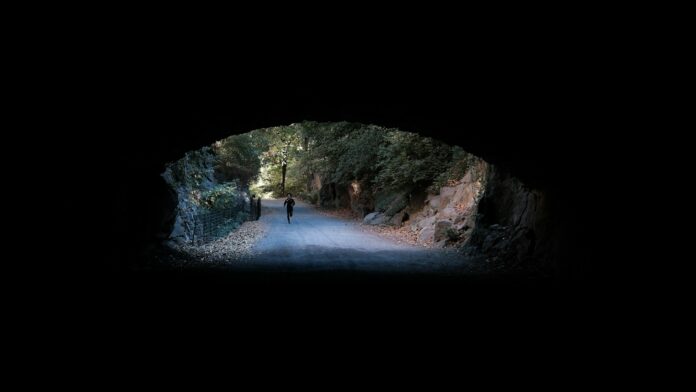
Most Central Park runners are not running. They are auditioning for versions of themselves. The main loop functions as a catwalk for expensive compression fabrics and recent divorces. The Bridle Path around the Reservoir is different. Dirt surface. Softer impact. Less posing. People there tend to run because they actually enjoy running or because a doctor frightened them during a physical. It’s where old Upper West Side men in faded marathon shirts quietly maintain frightening endurance levels. They move with the dead-eyed efficiency of Cold War diplomats.
6. North Woods lets Manhattan cosplay as wilderness
North Woods feels less like a park than a bureaucratic oversight. Suddenly there are trails. Rocks. Small waterfalls. Uneven terrain. You can hike there long enough to briefly forget Sweetgreen exists. Frederick Law Olmsted understood that urban populations occasionally require controlled exposure to fake nature in order to avoid political unrest. The elevation changes there remain one of the few places in Manhattan where your calves can experience genuine surprise. It also attracts fewer influencers because moss photographs poorly compared to acai bowls.
7. Battle Pass Hill is where Brooklyn performs meritocracy
Prospect Park’s loop contains one meaningful incline: Battle Pass Hill. Cyclists treat it like an entrance exam. Runners attack it with expressions usually associated with tax audits. This is Brooklyn’s preferred form of hierarchy. Nobody trusts inherited wealth anymore, but suffering through voluntary uphill repetition still carries moral prestige. Especially among people who work in branding. On summer mornings, the hill fills with lean hypercompetitive adults pretending they’re not competing. America collapsed into lifestyle signaling years ago. At least this version improves lung capacity.
8. Astoria Park Track gives Queens the dignity Manhattan refuses it
Under the RFK Bridge sits one of the city’s great public athletic spaces. No velvet rope. No biometric scan. Just lanes, river breeze, and views of giant infrastructure humming above you. Astoria Park Track feels almost suspiciously functional, which explains why Manhattan media rarely romanticizes it. Too practical. Too outer borough. Real New York exercise spaces often exist slightly outside the island where journalists live. You run there beside teenagers training seriously, old Greek men power-walking with terrifying discipline, and actors between auditions trying to maintain jawlines they can no longer emotionally afford.
9. Free kayaking is the closest thing the city offers to class revenge
The fact that you can kayak for free in Manhattan sounds fake, like something invented by a Scandinavian urban policy consultant. Yet every summer organizations along the Hudson and East River let ordinary people paddle around water historically reserved for shipping magnates and corpses. Your shoulders burn almost immediately. Finance interns discover muscles they assumed apps would eventually replace. Also, the psychological pleasure of exercising directly beside luxury towers remains underrated. Few things sharpen cardiovascular performance like proximity to oligarchy.
10. Summer Streets briefly turns Manhattan into propaganda
Every August the city closes miles of streets to cars and suddenly New Yorkers behave like they live in Copenhagen. People bike calmly down Park Avenue. Children move freely without existential threat from Escalades. Runners spread out across asphalt usually dedicated to honking rage. Then Monday arrives and everybody returns to inhaling brake dust beside delivery trucks idling outside Sweetgreen. Summer Streets feels less like a festival than a haunting glimpse of an alternate timeline where America chose public life over traffic violence.
11. Governors Island manufactures hills because Manhattan forgot geology
Most of Manhattan’s topography got flattened into real estate opportunity decades ago. Governors Island had to import hills artificially, which somehow feels spiritually accurate for contemporary New York. Even elevation arrives through development strategy. Outlook Hill offers short brutal climbs with harbor views that resemble expensive desktop wallpapers. You go up and down repeatedly while tourists nearby consume rosé in Adirondack chairs. The contrast captures the modern city perfectly: one group simulates effort recreationally while another performs it compulsively.
12. The Coney Island boardwalk turns cardio into Soviet cinema
Running on the boardwalk from Brighton Beach toward Sea Gate feels strangely post-imperial. Elderly Russian men play chess shirtless beside closed amusement rides. Teenagers blast drill music from speakers large enough for minor military operations. The wooden planks change your stride just enough to remind your knees they are temporary arrangements. Salt air hits differently there. Less wellness. More endurance. You understand why old boxing movies loved waterfront training scenes. Physical struggle appears nobler near rusting attractions.
13. Subway transfers are the city’s hidden stairmaster
The tunnel between the F train and the 1/2/3 at 14th Street should qualify as regional hiking. Same for the endless corridors at Times Square, where commuters achieve accidental ultramarathon distances before breakfast. Step counters love New York because the transit system quietly converts inconvenience into exercise. Every broken escalator becomes a character-building opportunity according to the MTA, an organization that approaches human suffering with near-Calvinist rigor. Somewhere in Midtown there’s a management consultant paying for a boutique stair-climbing class while ignoring the free vertical torture already available underground.
14. The Hudson River Park workout stations separate athletes from lifestyle brands
Pier 25 and Pier 40 contain outdoor equipment used by people frighteningly committed to calisthenics. Not wellness influencers. Actual practitioners. Men built like anatomical diagrams performing muscle-ups with serene concentration while nearby office workers struggle through three pushups and reconsider cold brew consumption. Outdoor fitness culture in New York still preserves traces of older masculine weirdness before everything became content. There’s little encouragement. Nobody claps. Failure hangs publicly in the air. Which is healthy, honestly.
15. Stuyvesant Town is suburbanism smuggled into Manhattan
Stuyvesant Town contains pathways uninterrupted by traffic, noise levels slightly below psychological warfare, and enough internal loops to walk for hours. It feels like somebody inserted a Midwestern retirement fantasy directly into the East Village’s nervous system. The place attracts elderly walkers moving with disciplined consistency, the kind of slow sustained movement longevity researchers fetishize in documentaries. You realize the real secret to fitness may not involve optimization at all. Maybe it’s just existing somewhere where your nervous system doesn’t receive twelve simultaneous stimuli every nine seconds.
New York has always confused suffering with virtue.
That confusion built skyscrapers, publishing empires, entire art movements, and several varieties of gastrointestinal disorder. Fitness culture merely monetized the same instinct with cleaner lighting and subscription models. The city itself still offers the original version for free. Stairs. Hills. Wind. Distance. Friction. Small humiliations repeated daily until they become cardiovascular adaptation. The great joke is that millions pay monthly fees to escape the exact physical conditions that once made New Yorkers accidentally robust.
Of course the outdoor gym only works if you surrender certain modern expectations. You will sweat unpredictably. Your route may include screaming. Public bathrooms become theological questions. Sometimes your workout gets interrupted by a man exposing himself near the Reservoir. Sometimes a pigeon nearly ends your bloodline on the Manhattan Bridge. This is not wellness. It’s urban conditioning. Different religion entirely.
Still. Late afternoon on Roosevelt Island. The skyline turning gold. Somebody jogging slowly beneath the tram cables. No mirrors. No curated playlist. No receptionist asking about membership tiers. Just a body moving through the city that shaped it. For a moment, the whole place almost feels generous.