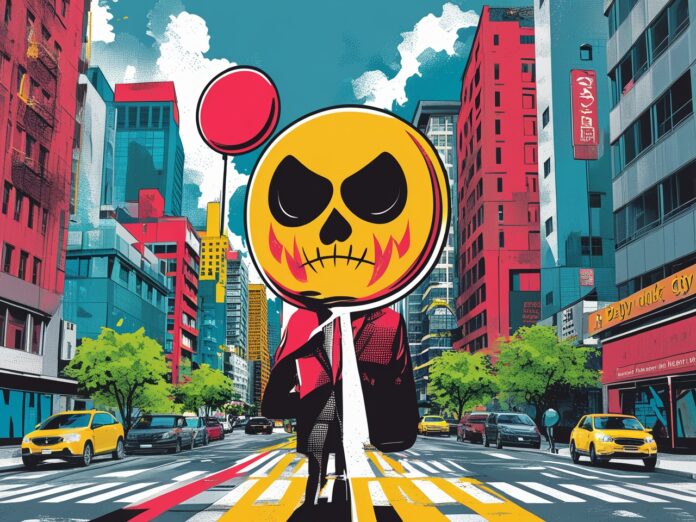

The problem with bad luck is not that we believe in it, but that we need it. In a city like New York, where causality is pulverized by pace, and outcomes rarely correlate with effort, the idea of misfortune feels strangely soothing. Friday the 13th is one of those secular rituals that pretends to mock itself while embedding its logic ever deeper. A cracked mirror on a glossy desk. A sign on the subway warning of “residual delays due to earlier incidents.” You read it and nod. Of course. It’s Friday. It’s the 13th.
In France, where I was born, we do not fear Friday the 13th. Quite the opposite. It’s associated with good luck. Lottery ads even target that date with winking optimism. The real danger is Tuesday the 13th, mardi treize, a day no one talks about and everyone quietly avoids. In Spain and Latin America too, it is Tuesday, not Friday, that brings doom. Mars, not Venus. The god of war, not love.
But in the United States, Friday the 13th has hardened into a pop cultural node: a minor superstition inflated by horror cinema, market cycles, and a vague Protestant suspicion of anything both feminine and pagan. The French calendar, following Catholic logic, held Friday sacred—death day of Christ, day of abstinence—while the Anglo world doubled down on its fear, merging Christian sacrifice with Norse numerology and the convenient imagery of witches in covens of thirteen. That narrative gets recycled as folklore, then sold back to us as content.
What’s more revealing than the fear itself is the form it takes. Friday the 13th in the U.S. is a cinematic horror, often grotesque and gory, rarely existential. In France, superstition around dates remains stubbornly ambient, embedded in patterns of behavior rather than spectacle. We may not speak of Tuesday the 13th, but we will not schedule surgeries on it. We will not begin new projects. We will, if possible, stay indoors. There’s a kind of bodily literacy in that silence, a choreography of avoidance learned without instruction.
Meanwhile, Americans laugh about their fear as if that immunizes them. Yet flights are emptier, meetings postponed, alarms checked twice. It’s not the content of the superstition that matters—it’s the infrastructure around it. Who makes the calendar? Who names the unlucky? Why do we still need an external force to explain the friction between our desires and our failures?
In this, bad luck becomes a placeholder for structural opacity. The landlord refuses to fix the boiler. Your debit card gets flagged, again. A migraine ruins the one night you made plans. “What are the odds?” someone says. But odds are not what we’re calculating. We’re assigning meaning to disruption, coding it as pattern.
In ancient Rome, augurs read the flights of birds to interpret the will of the gods. In twenty-first-century Manhattan, we refresh our tracking links and try to divine meaning from shipping delays. “Your package is arriving late due to weather or other unforeseen circumstances.” It might as well say: It’s Friday. It’s the 13th.
The most compelling thing about Friday the 13th is that it changes nothing but explains everything. No new misfortunes are introduced into the system; we just allow ourselves to name them. It gives contour to the otherwise random cruelty of systems too large to see. It turns daily entropy into narrative. That’s not irrationality; it’s strategy.
So yes, the subway broke down. The email never arrived. The nurse called with the wrong results. But maybe that’s not because it’s Friday the 13th. Maybe Friday the 13th is just the name we’ve given to the experience of being alive in a world where contingency governs everything, and nobody’s in charge.
Superstition is not a belief but an interface. A way to metabolize the noise of modern life into something legible. Call it medieval. Call it cinematic. But don’t call it obsolete. If anything, in this algorithmic century, we’ve never needed it more.